
Don’t Hoard Tutorials: Sell a Tiny “Content decay governance” Loop in 7–14 Days
Real-path breakdown: how “Content decay governance” gets paid, who buys, barrier “Medium”, and risks. Educational — no earnings promises.

Project snapshot
- Monetization: SEO trust (common public path)
- Barrier: Medium
- Best for: Content sites
- Promise: Stale pages hurt trust
- Important: educational breakdown only — no earnings guarantee
Opening: one question, one job
Don’t ask “is the niche dead?” Ask: who pays for “Stale pages hurt trust”?
Hype lives in headlines. Reality lives before the checkout link.
What follows is path + risk only — no income myths.
1. What is this?
Content decay governance exists to make this real: Stale pages hurt trust.
In the “Business cases” lane, this is usually a productized workflow, template, service, or media asset — not a lottery ticket. Judge it by whether the pain is frequent, delivery can be standardized, and acquisition can stay lawful.
Comparison table
| Dimension | Common trap | Better default |
|---|---|---|
| Product | Feature pile-on | Only deliver “Stale pages hurt trust” |
| Pricing | Build forever, price later | Commit to SEO trust |
| Audience | Everyone | Start with Content sites |
| Start | Full automation first | Barrier Medium; manual is OK |
| Narrative | “Income hype” | Verifiable path + clear risks |
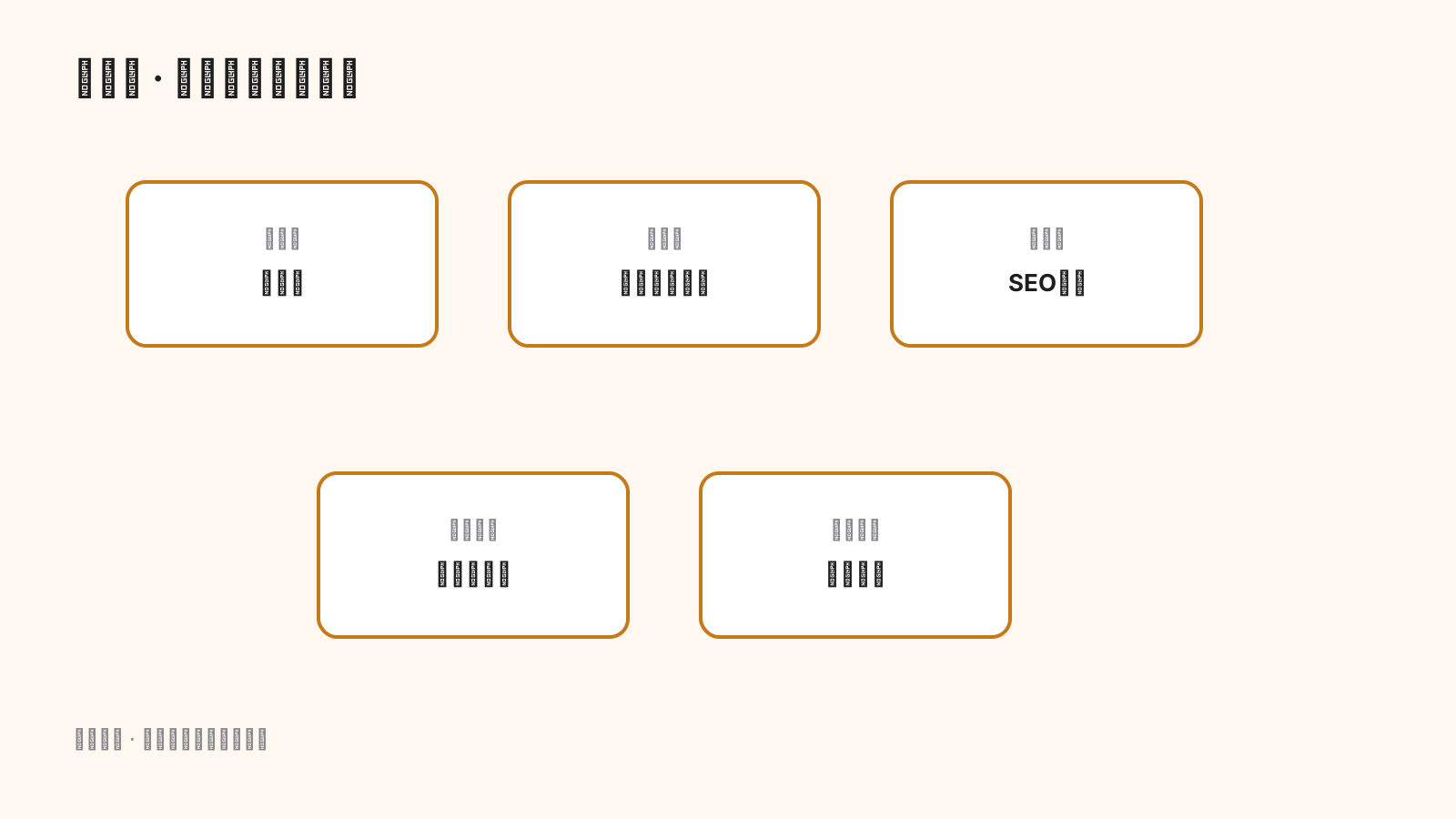
2. Where is the money logic?
2.1 Who pays?
Content sites usually already hack around the pain with spreadsheets, brittle outsourcing, or fragmented tools. Payment happens when saved time / fewer mistakes / more trust clearly beats the price — you’re selling an acceptable outcome for Stale pages hurt trust, not “another tool.”
2.2 Revenue stack
| Layer | What | Role |
|---|---|---|
| Core | SEO trust | Main cashflow |
| Entry | Trial / one-off / diagnostic | Lower friction, get real feedback |
| Add-on | Templates, onboarding, yearly support | Lift AOV & retention |
| Avoid | Income claims, unlawful funnels, charge-before-need | Protect reputation |
2.3 Acquisition
Prefer channels where the pain already shows up: niche communities, long-tail search, peer referrals, demos. Disclose ads/affiliates.
2.4 Contrast: who ships vs who shrinks
| More durable | Common failure | |
|---|---|---|
| Start | 3 real scenes + clear buyer | Feature pile / promo first |
| Delivery | Only “Stale pages hurt trust” is acceptable | Promise “do everything / easy money” |
| Cadence | First small sale or clear no in 7–14 days | “Almost ready” for months |
| Scale | Automate after renewals/referrals | Recruit agents before delivery works |
3. How can a normal person copy this?
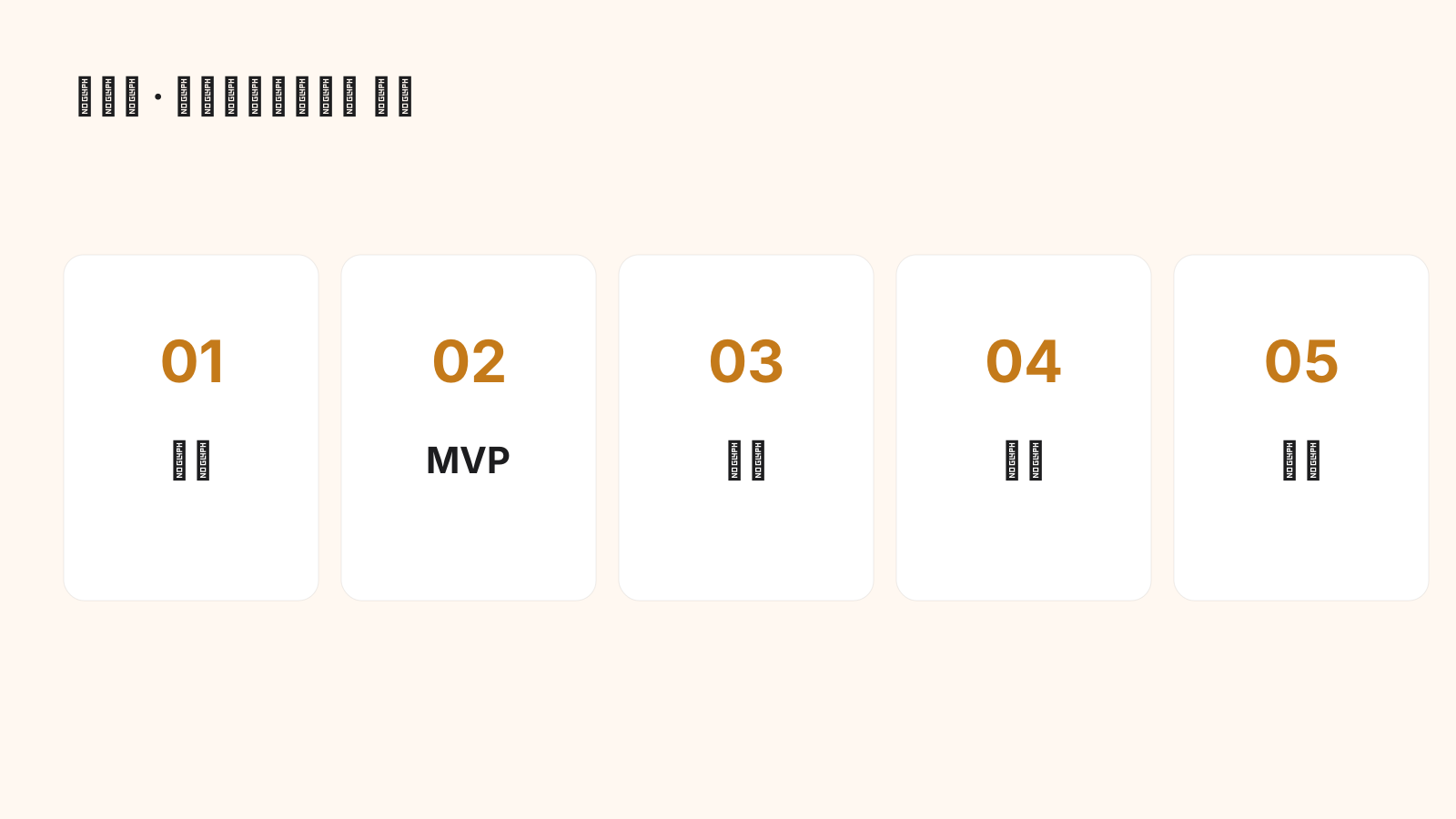
| Step | Timebox | Done means |
|---|---|---|
| 1. Promise | 1 day | Who + scene + result (Stale pages hurt trust) |
| 2. MVP | 7–14 days | Someone pays a little for the loop |
| 3. 10 humans | 2–4 weeks | Reuse / referral / renew appears |
| 4. Boundaries | Parallel | Refunds, data ownership, limits written |
| 5. Cadence | Weekly | Improve one lever only |
4. Risks & moats
| Risk | Signal | Response |
|---|---|---|
| Platform freebies | Feature bundled for free | Go deeper on vertical defaults |
| Price wars | Only compete on cheap | Prove speed & case quality |
| Hype copy | Overpromise outcomes | Stay educational |
| Premature scale | Selling before you can deliver | Lock 10 real wins first |
| Mistaking hype for demand | Likes high, quotes low, payments lower | Validate with prepaid / paid pilots |
Who should wait: people with zero conversations among Content sites; anyone treating “Content decay governance” as a lottery; anyone unwilling to write refund/data boundaries.
Moats that are realistic: vertical templates, authorized cases, reliable delivery, trust from content/community.
5. Bottom line
Content decay governance works when Stale pages hurt trust is felt quickly. Validate payment and repetition before you scale — clarity and compliance beat “looking clever.”
Next: Finish the smallest verifiable action above. Related: more in this lane.
Turn this SOP into a next step
Free blanks now. Full pack CNY 49: we send a ZIP after payment (local files, not a web membership).
You might also like
 Free
Free“content-site SEO cadence” Looks Lucrative — Public Cases Hide Cost and Risk
Real-path breakdown: how “content-site SEO cadence” gets paid, who buys, barrier “Low–med”, and risks. Educational — no earnings promises.
Take a look →
 Free
Free“booking and shift tool — price anchoring…” Looks Lucrative — Public Cases Hide Cost and Risk
Real-path breakdown: how “booking and shift tool — price anchoring…” gets paid, who buys, barrier “Medium”, and risks. Educational — no earnings promises.
Take a look →
 Free
FreeNo Income Myths — Why “Refund reason structured form · hot rewr…” Gets Repeat Buyers
Real-path breakdown: how “Refund reason structured form · hot rewr…” gets paid, who buys, barrier “Low–med”, and risks. Educational — no earnings promises.
Take a look →
 Free
FreeViral Threads Talk “pre-publish check — internal links and k…” — This Checklist Makes It Real
Real-path breakdown: how “pre-publish check — internal links and k…” gets paid, who buys, barrier “Low”, and risks. Educational — no earnings promises.
Take a look →
 Free
Free“stop-doing ritual — after-sales scripts …” Looks Lucrative — Public Cases Hide Cost and Risk
Real-path breakdown: how “stop-doing ritual — after-sales scripts …” gets paid, who buys, barrier “Low”, and risks. Educational — no earnings promises.
Take a look →
 Free
Free“refund approval tiers — compliance pitfa…” Looks Lucrative — Public Cases Hide Cost and Risk
Real-path breakdown: how “refund approval tiers — compliance pitfa…” gets paid, who buys, barrier “Low–med”, and risks. Educational — no earnings promises.
Take a look →